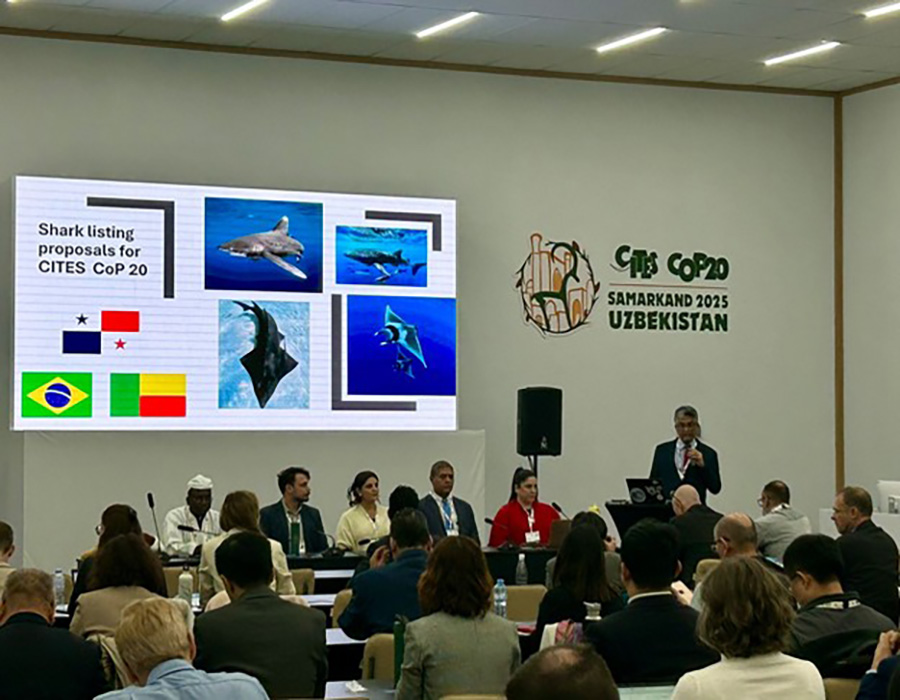

🇺🇸 During the second day of CITES CoP20, this Side Event took place with the participation of more than 100 attendees. The event brought together international experts to present the latest scientific evidence on the conservation status of sharks and rays, and to highlight the importance of strengthening protection measures under CITES.
The first part of the session focused on proposals for the inclusion of several highly vulnerable species in Appendices I and II. Presenters shared data on giant guitarfishes, wedgefishes, oceanic whitetip sharks, mantas and mobulas, smoothhounds and catsharks, and gulper sharks. The presentations revealed alarming trends, including population declines exceeding 80–90%, ongoing targeted and incidental fishing, persistent illegal trade, and extremely vulnerable life-history traits—such as slow growth, low fecundity, and late maturity—that limit the recovery of these groups.
The discussion then turned to the fact that, despite existing listings in CITES Appendix II, many species continue to face intense pressures due to implementation gaps, persistent trade, and insufficient monitoring. These challenges underscore the need to uplist several key species to Appendix I.
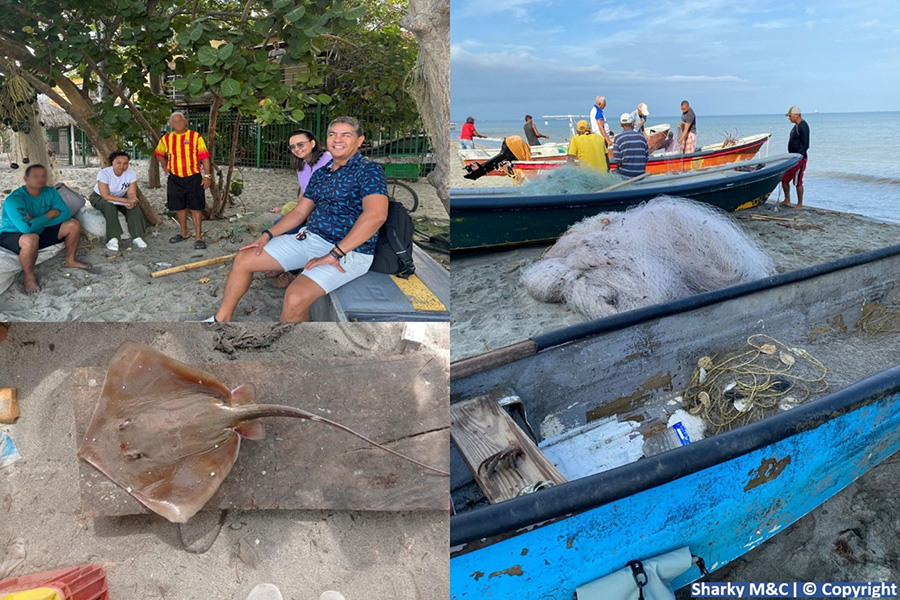
The event concluded with a presentation by Shirley Binder, who highlighted Panama’s efforts to link conservation with the well-being of coastal communities. She showcased initiatives such as fisheries characterization, bycatch reduction strategies, awareness campaigns (“Shark-Free Ceviche”), participatory tagging programs, and collaboration with national authorities to strengthen compliance. She emphasized that protecting sharks and rays is not only an environmental responsibility but also a strategy to ensure the sustainability and resilience of fishing communities.
Overall, the event demonstrated that science, policy, and community engagement must advance together to secure the future of these highly threatened groups.
 Durante el segundo día de la Cop 20 de la CITES se lleva a cabo este Evento Paralelo y conto con la participación de más de 100 asistentes. El evento reunió a expertos internacionales para presentar la evidencia científica más reciente sobre el estado de conservación de tiburones y rayas, y para destacar la importancia de fortalecer las medidas de protección bajo CITES.
La primera parte de la sesión estuvo dedicada a propuestas de inclusión en Apéndices I y II para varias especies altamente vulnerables. Se expusieron datos sobre guitarra gigantes, wedgefishes, tiburón punta blanca oceánico, mantas y mobulas, tiburones toyo y tollos, y tiburones gulper. Las presentaciones mostraron tendencias preocupantes como declives poblacionales superiores al 80 -90%, pesca dirigida e incidental persistente, comercio ilegal y biología extremadamente vulnerable incluyendo crecimiento lento, baja fecundidad y madurez tardía que limita la recuperación de estos grupos.
Posteriormente, se discutió cómo, pese a los listados existentes en CITES Apéndice II, muchas especies continúan enfrentando presiones intensas debido a fallas en la implementación, comercio persistente y monitoreo insuficiente, destacando la necesidad de elevar la protección a Apéndice I para varias especies clave.
El evento concluyó con la intervención de Shirley Binder, quien resaltó las acciones de Panamá para vincular la conservación con el bienestar de las comunidades costeras. Presentó iniciativas como la caracterización de pesquerías, la reducción de captura incidental, campañas de sensibilización (“Shark-Free Ceviche”), programas de marcaje participativo y la colaboración con autoridades nacionales para fortalecer el cumplimiento. Subrayó que proteger tiburones y rayas no solo es una obligación ambiental, sino también una estrategia para asegurar la sostenibilidad y resiliencia de las comunidades pesqueras.
En conjunto, el evento demostró que la ciencia, la política y el trabajo comunitario deben avanzar de manera integrada para garantizar el futuro de estos grupos altamente amenazados.