
🇺🇸
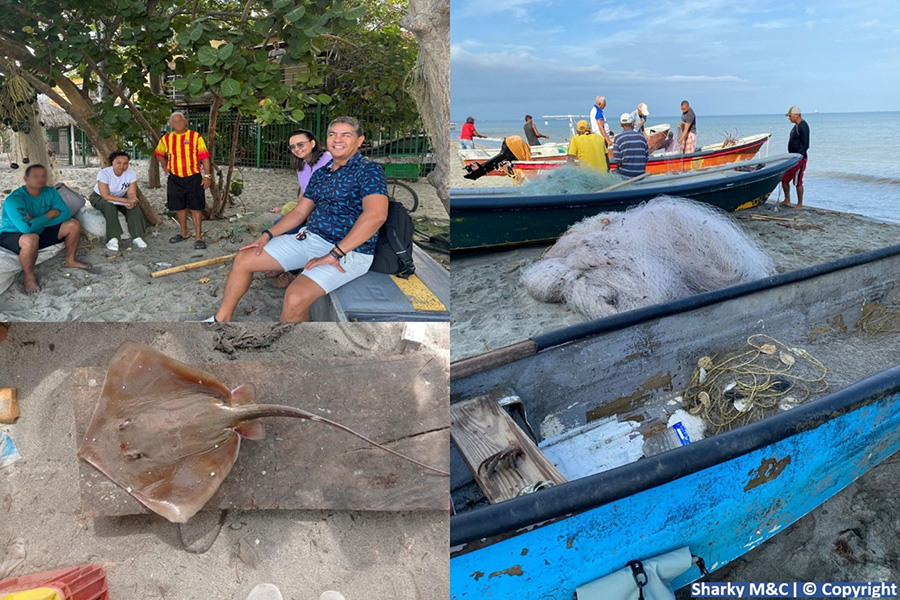
In the Colombian Caribbean, Sharky Management & Consulting, with support from the Save Our Seas Foundation, is leading an ambitious initiative to better understand and reduce ray bycatch. Working directly with the fishing communities of Don Jaca, Pueblo Viejo, Tasajera, and Playa Salguero, the team has carried out more than 60 field monitoring sessions, collecting key information on species, sizes, fishing gear, and capture locations. To date, they have recorded 79 rays—mainly Hypanus guttatus, along with Styracura schmardae and occasional incidental catches. This community-centered approach has strengthened trust, even in areas where initial resistance was high.
All collected data is feeding into a growing database that helps identify trends, gaps, and opportunities for improvement. Each field visit is also a chance to speak with fishers about the importance of protecting juvenile rays and breeding females. The next steps include deeper interviews, stronger collaboration with scientists, and community workshops to co-create realistic, sustainable fishing solutions. These efforts mark crucial first steps toward ensuring that rays—quiet but essential guardians of marine ecosystems—receive the protection they deserve.
For the complete article: https://saveourseas.com/update/on-the-trail-of-rays-in-the-colombian-caribbean/
En el Caribe colombiano, Sharky Management & Consulting, con el apoyo de la Save Our Seas Foundation, desarrolla una iniciativa para entender y reducir la captura incidental de rayas. En colaboración directa con las comunidades pesqueras de Don Jaca, Pueblo Viejo, Tasajera y Playa Salguero, el equipo ha realizado más de 60 monitoreos de campo, recopilando información clave sobre especies, tallas, artes de pesca y sitios de captura. Hasta el momento, se han registrado 79 individuos—en su mayoría Hypanus guttatus, junto con Styracura schmardae y otras capturas incidentales. Este enfoque comunitario ha permitido fortalecer la confianza, incluso en zonas donde la resistencia inicial era mayor.
Toda la información recogida alimenta una base de datos en crecimiento que ayuda a identificar tendencias y oportunidades de mejora. En cada salida de campo también se conversa con los pescadores sobre la importancia de proteger juveniles y hembras reproductivas. Los próximos pasos incluyen entrevistas más profundas, un trabajo conjunto con científicos y talleres comunitarios para crear soluciones realistas y sostenibles. Estos esfuerzos representan los primeros pasos para garantizar que las rayas—discretas pero esenciales para el equilibrio marino—reciban la protección que merecen.